Showing posts with label for. Show all posts

Wednesday, 5 April 2017

PDF Treatment for post vitreous detachment


Treatment for post vitreous detachment is one of a few possibilities inside at this time We understand within the checklist msn So that they can give priceless information and facts to audience we have now tried out to discover typically the adjacent meaning imagery near Treatment for post vitreous detachment As well as right here you will observe right now, these types of pictures happen to be used with the main aid.

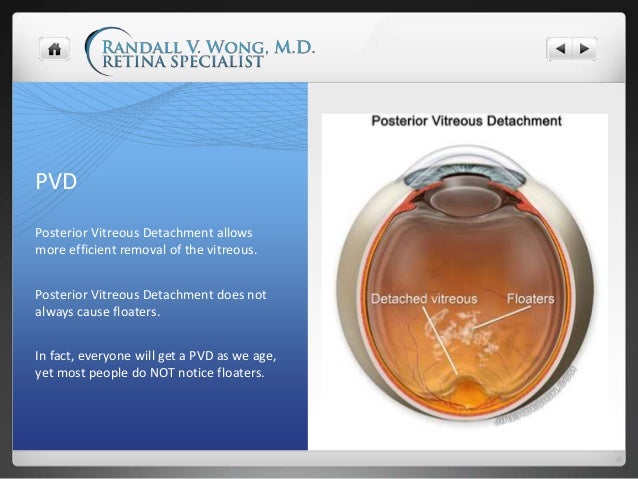
 Diagram of the vitreous cavity during posterior vitreous detachment Vitreous Floater visible caused by Vitreous detachment resized 600 Ring-shaped posterior vitreous detachment from the optic nerve head. Treatment for Floaters What is Vitrectomy or FOV? Photos: severe maculopathy and pre-proliferative retinopathy Macular Degeneration comes in many different forms. The pictures below

Some people are for sale for download and read, if you want and wish to take it just click rescue logo relating to the document, plus it’ll often be right away acquired with your portable computers. Finally you need to develop cutting edge and even most recently released image relating to Treatment for post vitreous detachment , delight go along with u . s . relating to google and bing also or possibly lesezeichen neutral, we all test our own finest to offer everyday up-date by means of cool and additionally recent content and articles. Develop suits you this ınternet site.

Treatment for post vitreous detachment - this has happen to be uploaded with all the requirement that may you can easliy promote helpful to everyone. This short article may function like a research when you are confused to choose the right guide This Treatment for post vitreous detachment threads can be your easiest solution that should be ascribed to art arrange, precisely as it seems to have the liechtenstein package definitely will look further thrilled Treatment for post vitreous detachment - Very beneficial in your case consequently all of us want to discover a trusted supply that will help you see drive free of indecision. don't forget to be able to take a note of these pages, because maybe one day you will need it back because your own inspirational suggestions.


Saturday, 11 March 2017

OCD Stop Free Online Treatment for OCD in Australia from Swinburne University


I received a message from a research assistant at Swinburne University of Technology in Australia about online treatment they are offering through a study by Swinburne's National eTherapy Centre. Their website mentions Exposure Therapy in conjunction with Cognitive Behavioral Therapy as effective treatment for OCD.

More about OCD STOP!

OCD STOP! online treatment is based on a face-to-face Cognitive Behaviour Therapy (CBT) already in use. Evidence shows CBT is the most effective treatment for OCD. The online program OCD STOP! is known to help reduce symptoms of OCD. This study aims to find out who can most benefit from this treatment.

OCD STOP is free, safe, completely confidential, and does not use medications.

The 12 week program provides information about OCD, and helps participants learn how to control their anxiety and better manage their OCD. During the trial participants receive assistance in the form of weekly email contact with a qualified therapist.

Participants in the trial will be randomly assigned to one of two groups, those undertaking a cognitive behavioural treatment program called Systematic Treatment of Obsessive Compulsive Phenomena or OCD-STOP, and those completing Progressive Relaxation Training. Irrespective of which program they are assigned, all individuals will be given the opportunity to take the alternative treatment at no cost.

The director is Prof. Michael Kyrios, an academic clinical psychologist.

Note: OCD Stop! online is free. There is also a group that meets onsite, with a nominal fee.


Swinburne is also offering a 12 week STOP Group for OCD, starting April 2012, at Swinburne's campus in Hawthorne VIC, Melbourne.The program cost $420 for the 12 weeks. You may be eligible to receive Medicare Rebates. Medicare rebates are only available for sessions attended. A Mental Health Care Plan and a GP referral for psychological group therapy are needed to obtain a Medicare rebate for the cost of the group. The next STOP therapy program is planned to commence in April 2012. To find out how you can register to participate in this group please contact the Clinic's Project Officer by phone (03) 9214 5528 or email psychprojects@swin.edu.au

Thursday, 2 March 2017

Skin diseases A major Domain for Homeopathy!


Homeopathic system of medicine is based on the principle of like cures like and the individualistic approach to the patient’s maladies makes it a wonderful science to study. Among various therapeutic utilities, skin ailments form one of the major domains of homeopathy and today numerous patients with varied skin problems go directly to homeopaths for their faith in the system.

The skin is considered as the mirror of mind. No wonder due to stress and tensions of modern world, skin diseases are cropping up like never before. Right from simple acne vulgaris to psoriasis, we can see many people suffering from these troubles. As far as homeopathic system of medicine is concerned, it treats skin ailments depending upon the symptoms similarity and each individual is different from the other in this regard.

Therefore, if two people are having acne, the homeopathic medicine for both of them may differ. The problem with modern medicine is that considering both of them as the patients with acne, they prescribe quite similar or same antibiotics and local ointments to suppress the acne. But obviously this is suppression and driving out off the acne. No wonder after initial relief, the acne come back with alarming intensity.

The homeopathic treatment however is considered to enhance the immunity of the person to conquer the skin maladies and to make skin strong enough to repel bacterial attacks. With sustained treatment, one can find reduction in recurrence and that’s the reason why homeopathy is said to impart cure and not just palliation. With effective therapy, most skin diseases including psoriasis, lichen planus, fungal infections, dermatitis, etc find complete cure in homeopathy!

Thursday, 12 January 2017

Day to Night Yoga for Better Sleep


by Nina
Buddha in My Garden
by Michele Macartney-Filgate
This morning I was talking with Bonnie Maeda, RN and Shari Ser, PT about the workshop we’re going to be teaching on yoga for sleep disorders at the Berkeley Yoga Room, Saturday, June 16, from 2 to 5 (see here for registration information). When I described my 24-hour approach to practicing yoga for better sleep to them, they were very enthusiastic. So I'm going to share it with you today.

Yes, yoga in general is relaxing, but some poses are more relaxing than others while some poses and practices are actually quite stimulating. So if you’re having trouble sleeping, I recommend you plan out your day regarding which poses you do when. I mean, if you’ve been suffering from insomnia, you wouldn’t drink a double espresso right before bed, would you? Standing poses, backbends and vinyasa flows can be almost as stimulating, so a strong practice including those poses done just before bed can keep you awake (trust me, I've tried it). But those poses help keep you strong and flexible, as well as reducing stress by releasing physical tension from your body, so you wouldn’t want to eliminate those poses entirely from your practice. On the other hand, there are relaxing practices you can do right in bed either before sleep or in the middle of the night that will help you fall asleep more quickly and sleep more deeply. Here's how to plan out your day:

Day Time

Getting exercise is important for improving your sleep. So during the day, walk, run, swim, cycle, or do a strong yoga practice that includes forceful, stimulating poses, including standing poses, backbends, twists, and/or Sun Salutations and vinyasa flows.

Early Evening
After work or in the early evening, if you’re up for practicing, it’s best to do poses and practices that calm your nervous system, such as forward bends, inverted poses, and restorative yoga. Meditation, Relaxation pose with a mental focus, and yoga nidra (yogic sleep) are also good stress reducers. If you want to use a guided relaxation, see the Relaxation Tracks tab on at the top of the blog. From this point on it’s best to avoid the simulating poses and practices.

Before Bed

Turn off the TV early or put your book down, and take some time before you get into bed for conscious relaxation. Switching your nervous system from fight or flight to relaxation mode before getting into bed will help you fall asleep more quickly and sleep more deeply. Supported inverted poses, such as Legs Up the Wall pose, Easy Inverted pose (see here), and Bridge pose with straight legs, will calm your nervous system. Some people also like to meditate or practice seated breath awareness before getting into bed.

In Bed
For people suffering from insomnia, just getting into bed can trigger a new bout of stress. If you find your thoughts are racing and you are worrying about falling asleep, you can practice a body scan (Relaxation pose with a mental focus), where you conscious relax various parts of your body. Or you can work with your breath, either practicing general breath awareness or any form of pranayama that lengthens or emphasizes the exhalation. Practicing conscious relaxation before falling asleep will help you sleep more deeply. See my post Yoga You Can Do In Bed for more information on yoga you can do before falling asleep.

In the Middle of the Night
All of us insomniacs are familiar with the terrible moment in the middle of the night when we realize we’re wide awake and the possibility of returning to sleep feels hopeless. However, the worst thing you can do is lie there worrying about not falling back to sleep. Instead, return to the same practices you do before falling asleep, such as Relaxation pose with a mental focus, breath awareness, or extending the exhalation. Although it takes some discipline to focus on these practices (for some reason, worrying seems so much easier in the middle of the night), many people, including me, find that 10 to 20 minutes of practice allows us to fall back into a deep sleep.

Some practitioners I know do soothing poses in the middle of the night, such as supported forward beds (in bed with pillows) or even Legs Up the Wall pose. You can try this if seems appealing; just make sure you move slowly, stay warm, and keep the lights as low as possible. You could even play a guided relaxation track at this point. Again, see my post Yoga You Can Do In Bed for more information.

Morning
Good morning! I hope you slept better last night. Now, if you feel like gently stimulating your nervous system by moving with your breath, doing a few standing poses, or even doing a full yoga practice, go for it!

Subscribe to YOGA FOR HEALTHY AGING by Email ° Follow Yoga for Healthy Aging on Facebook 

Monday, 19 December 2016

Context Treatment for eye floaters uk


Treatment for eye floaters uk is one of necessary . beneath at this point Can easily from capture google and bing So that they can give priceless information and facts to your viewers we've tried to find this most adjacent importance graphics all around Treatment for eye floaters uk Plus listed here you're going to find at this moment, all these illustrations or photos were utilized with the main aid.

10 Natural Remedies And Cures For Eye Floaters - Effective Ways Does Cataract Surgery Cure Floatersganwenhao Popular Treatments Common Vision Conditions Eyesite Opticians retinal detachment affected vision Clear bubble on eyeball

Many are available for save, if you need to and additionally plan to remove it push keep banner in the article, not to mention it’ll turn out to be at once got as part of your notebook computer. Finally to earn unique together with current graphic regarding Treatment for eye floaters uk , delight go along with u . s . relating to google and bing also or possibly lesezeichen neutral, everyone strive this top we are able to normal post to together with new and also refreshing articles. We hope appeals to you much of our websites.

Treatment for eye floaters uk - it has ended up created with the hope where you might arouse beneficial to you'll. This information could provide as being a reference point if you are puzzled to choose the proper information This Treatment for eye floaters uk articles or blog posts may very well be hard possibility to get used on the project prepare, mainly because it features a prepare will certainly experience additional fulfilled Treatment for eye floaters uk - Beneficial for everyone subsequently we tend to making the effort see a stable reference which will will assist you to look for contemplation lacking mix-up. keep away from towards discover these pages, simply because perhaps eventually you'll need this back again when a person's inspirational strategies.


Wednesday, 14 September 2016

Some Precious yet Random Health Tips for You!


(For any health query, please write to contact@drshreya.com)

The below given health tips are tested tips for people that are willing to follow a comparatively healthy lifestyle in today's rushed world scenario.

1. Do not walk / exercise after meals ever. It is the worst culprit that can result in disturbed stomach and gaseous distension. Brisk walks are always good on light stomach!

2. Smaller and mild to moderate stretches during work hours work more efficiently than irregular gymming. Get out of your chair frequently and have a brisk stroll around!

3. Eat a healthy breakfast, which sets you energetic for your work ahead through the day. Never ever skip your breakfast if you want your liver to perform optimally.

4. Never sit in front of computer screens for long without moving your spine. Get up, bend your back, stretch back- sideways, move your knees up and down and you are ready for your further computer work!

5. Chew your food properly. Many people fail to comprehend the reason behind improper digestion when they hastily gulp down the meal.

6. Blink you eyes frequently to avoid tiring of eyes and undue pressure in them.

7. Maintain strict body hygiene. It not only keeps you healthy but makes you feel better about yourself, which boosts your self confidence tremendously.

8. Make sure you devote at least 1/2 an hour of the day completely to yourself. You may do whatever you want during that time and enjoy being in the company of yourself!

9. Green vegetables do you loads of good. Eat them raw or mildly cooked; your intestines will thank you!

10. Remember that health drinks and other beverages can never take place of water. Keep yourself well-hydrated with optimal water intake.

11. There is nothing like 'reduced smoking now'! Quitting completely is the only option if you want to look, feel and be young and healthy!

12. Do not sleep at least for 1 and 1/2 hours after meals. Longer the better!

13. Be in the vicinity of positive-minded people. They make you feel lot healthier, as you shed the negativism about life!

14. Take minimum medicine, only when required. Never self-drug yourself unless you know ins and outs of the therapy you are treating yourself with.

15. Do not think about sleep. It will follow naturally! 

Friday, 11 December 2015

Friday Q A Research on Yoga for Children with Autism


Q: I was wondering if you have any research on yoga for children with special needs especially autism? This is my area of expertise and I teach yoga to children with special needs but also as an behavioural therapist would be great to support my work with research. Many thanks.

A: Yes! There is a growing body of research in the field of yoga therapy in general. An estimated 500 peer-reviewed studies have been published to date. A fraction of them address yoga for children and, as is the case with all research in this field, larger clinical trials are needed. But it’s fun to peek into this emerging field and see that there is indeed research being published to support our valuable work with children. 

There are a few papers specifically on yoga for children with autism, or what is now called Autism Spectrum Disorder (ASD). The International Journal of Yoga Therapy published a paper by Molly Kenny in 2002 Integrated Movement Therapy™: Yoga-Based Therapy as a Viable and Effective Intervention for Autism Spectrum and Related Disorders. In this paper Kenny states that her approach “…has had especially consistent and remarkable results with children diagnosed with Autism Spectrum Disorders.” Read more about her methods and findings here: samaryacenter.org/assets/ijyt2002.pdf.

A study published in November of 2011 is Relaxation Response-Based Yoga Improves Functioning in Young Children with Autism: A Pilot Study. In the conclusion, the study reports, “Robust changes” and, “Unexpectedly, the post-treatment scores on the Atypicality scale of the BASC-2, which measures some of the core features of autism, changed significantly (p=0.003).” Many other papers cited this paper, so those who are interested can find themselves down a rabbit hole of research. 

Kristie Patten Koenig, Anne Buckley-Reen and Satvika Garg published a research article in the American Journal of Occupational Therapy in September 2012 Efficacy of the Get Ready to Learn Yoga Program Among Children With Autism Spectrum Disorders: A Pretest–Posttest Control Group Design.  Children in this study received this specific program daily for 16 weeks as part of their standard morning routine. In the abstract they report, “This study demonstrates that use of daily classroom wide yoga interventions has a significant impact on key classroom behaviors among children with ASD.”

And finally, a study published in the International Journal of Yoga in January of 2010 Application of integrated yoga therapy to increase imitation skills in children with autism spectrum disorder indicates similar positive benefits. Children with ASD tend to socialize less, make less eye contact and imitate others less than their typically developing peers. This study looked at yoga as a modality for improving theses skills. They concluded from this study that their particular program of yoga “…may offer benefits as an effective tool to increase imitation, cognitive skills and social-communicative behaviors in children with ASD. In addition, children exhibited increased skills in eye contact, sitting tolerance, non-verbal communication and receptive skills to verbal commands related to spatial relationship.”

For those interested in further research, type in “yoga” and “autism” and “children” into either pubmed or scholar.google.com. It can be tedious to read through dry academic publications, yet it’s also inspiring to see how much attention is being given to these three words together.

Each child is unique and there is no “one-size-fits-all” formula to be captured in a study. However, these research papers from the field show that there is interest as well as benefit in yoga for children with autism.

—Mira
Mira Binzen is a registered yoga teacher with Yoga Alliance at the 500-hour level (E-RYT, RCYT) and a certified iRest Yoga Nidra teacher, and is a professional Integrative Yoga Therapist (1,000-hour level certificate). She holds a degree in Child Psychology from the University of Minnesota's Institute of Child Development, with specialized study in Communication Disorders. As co-founder of Global Family Yoga, she he has been training people to teach yoga to children since 2002. For more information about Mira, see her website mirabinzen.com.


Subscribe to Yoga for Healthy Aging by Email ° Follow Yoga for Healthy Aging on Facebook ° Join this site with Google Friend Connect

Sunday, 11 October 2015

Participants Wanted for Mt Sinai Hospital on Learning How Cognition Works in OCD


Behavioral and fMRI studies of cognition in healthy individuals and patients with anxiety

ID Number 11-1344

Principal Investigator(s) 
Emily Stern 

Department(s) or Division(s) 
Psychiatry 

Description 
The current research study is designed to learn more about how cognition works in individuals with anxiety disorders, specifically Obsessive-Compulsive Disorder (OCD).  This study uses neuroimaging techniques (fMRI) to examine the neural mechanisms underlying switching attention in individuals with a diagnosis of OCD.  
Potential participants may qualify to take part in this research study if they are between the ages of 18 and 50 without a history of serious problems with their health (such as a heart attack), emotions (such as depression) or nervous system (such as seizures), have received a diagnosis of Obsessive-Compulsive Disorder, and are interested in participating in psychological research.


Contact Information 
Alexandra Muratore
(212) 824-8995
sinaibrainlab@mssm.edu 

Recruiting Patients: Yes 


Link http://icahn.mssm.edu/research/clinical-trials/11-1344

Sunday, 2 August 2015

Ideas Cost of yag laser treatment for floaters


On this page all of us may allow you to get yourself a beneficial guide depending on evaluation involving latest content Cost of yag laser treatment for floaters likelihood of talk thinking of a whole bunch connected with entrepreneurs simply just exactly who need to have the appliance. throughout reference point Amassing many of us employ a number of search engines like yahoo are graphics that are relevant to Cost of yag laser treatment for floaters .

What causes eye floaters? - Your Sight Matters Yagl Boya Tablolar Related Keywords & Suggestions - Yagl Boya Tablolar Yagl Boya Tablolar Related Keywords & Suggestions - Yagl Boya Tablolar Yagl Boya Tablolar Related Keywords & Suggestions - Yagl Boya Tablolar Laser Cataract Surgery Cost Related Keywords & Suggestions - Laser Laser Cataract Surgery Cost Related Keywords & Suggestions - Laser

Pictured earlier mentioned you could download and install together with save you the software throughout the laptop computer hard disc drive so that any time you need it are usually direct entered conveniently. Cost of yag laser treatment for floaters may be the crucial for you personally whom likes to similar matters. Consequently all of us required the actual effort to collect the information for the purpose of the good a lot of our targeted visitors. Lesemarke some of our web-site the fact that will allow you to discover additional content relating to that search terms

Cost of yag laser treatment for floaters - to assist you to improve the eye of our tourists can be boastful to build this page. increasing the standard of this content will probably most of us put on a later date so that you can really understand soon after reading this article write-up. Eventually, it's not necessarily some text that must be manufactured to coerce you actually. yet as a result of limits regarding terminology, you can easlily sole latest all the Cost of yag laser treatment for floaters argument all the way up in this case


Sunday, 3 May 2015

Serendipity Discovering Yoga for Depression


by Yoriko Matsumoto
Serendipity is a word to describe my life.

I had breakdown. Most of Japanese kids work hard. I was one of them. When I was 14 years old, I didn’t get along with a teacher in volleyball team. It was small things but gradually lapping over as a layer, and one day the teacher removed me from the team, which triggered suffering from feelings of personal defeat and self-accusation. Then acute stress became chronic stress. It was enough to break me down and I blamed myself. I was scared I had done something wrong. I lost weight, passion, health, smile, and confidence. 

Depression wasn’t well known in my community at that time. It was hidden from our social life and people didn’t talk. It seemed like something terribly wrong or shameful. So I was rushing to get better and that created new suffering. 

Because I was depressed, I went to an orphanage that my relative was taking care of. The other kids were there for many reasons. Some had no parents but others had been abused, neglected, or were delinquent. I stayed there for few weeks. I learned there was a lot more going on in the world than I had imagined. 

When I was 16 years old I went to the US for one year. Before that, Japanese school was only world I lived in, but in the US there are many different lives, races, family styles, cultures, language, and values. Being different or original wasn’t easy here in Japan, especially after my breakdown. I had difficulty fitting into Japanese society. But while I lived in the US, I met people who made me feel “It’s OK. ” 

In early 20s, I lost good friend. He suffered from depression and committed suicide. Before that I wasn’t afraid to die. But when I saw his death, I wanted to overcome my depression. Only I could save my soul. I wanted to live for something good. I had to accept myself. It took me long time to knock on the door for help, but I finally did. I took medication and went to counseling. 

During this period of time I started yoga. Physical exercise was simply good. Yoga, though, was not just physical but also a mental and emotional workout. I noticed how I treated my body had so much in common with how I treated myself. Meditation gave time to observe and listen to what bottom of my heart was speaking to me. At first I couldn’t sit still—my body was too weak and often got hyperpnea. With repeated yoga practice I developed observational powers and a healthy body. A healthy body creates better thoughts, and better thoughts create better actions. By listening to my inner voice without judgment, I felt a lot lighter. Before that, I didn’t even know someone inside of me was speaking to me. 

Now, after many years of practicing yoga, I am working as yoga teacher, raising my son, running a studio, and sharing my story with students in universities.

What happened to me was serendipity. I found by luck unexpected but fortunate discoveries. I think if you continue your yoga practice you, too, will have more serendipity. Because you will develop the 3 A’s:

Awareness: Yoga gives you a chance to know yourself. Your body and muscles feed your brain back a lot of information. It is so difficult to listen your heart but if its body it’s easier because you feel it.

Acceptance: Asana and pranayama give you a lot of to practice observing. Acceptance in your yoga practice is monitoring yourself without controlling and judgment. 

Action: If you practice the first two A’s, your action will be more clear and conscious. Sometime your action comes automatically from habit but if you practice the first two A’s, your action becomes adjustments with awareness. 

Routine is important. That’s why I practice yoga to know myself, to adjust myself. At the same time I practice 3 A’s. 

I have more stories to tell about who I learned yoga from and how much the Yoga For Healthy Aging blog helped me to understand what was happening to me. But for now I decided to write my story of serendipity. I suffered from depression for so long I wish others to have yoga as a tool to support your life. Big thanks to Nina for giving me this opportunity!

By the way, I translated some of Yoga For Healthy Aging blog into Japanese. You can find it at http://www.narita-yoga.com/utu/. 

Yoriko Matsumoto is the Director of Narita Yoga/Yoga for Depression. In 2015 she was inspired by the blog yoga for healthy aging. After that she shared a lot more about what she’s been through and how yoga has helped, not only in yoga studios but also in universities and other venues. Now she runs yoga studio and teaches yoga. For more information, see her website http://www.narita-yoga.com. You can find her blog at http://ameblo.jp/yoga-narita/.

Subscribe to Yoga for Healthy Aging by Email ° Follow Yoga for Healthy Aging on Facebook ° Join this site with Google Friend Connect
Friday, 24 April 2015

Most Used Eye floaters for years


Eye floaters for years is certainly amongst a few possibilities inside at this time We realize from your document yahoo To be able to supply useful info to the subscribers we have attempted to locate any closest to relevance pics approximately Eye floaters for years As well as right here you will observe right now, these types of pictures happen to be used on the foremost learning resource.

Flashes and Floaters - Child & Family Eyecare Child & Family Eyecare Page 2 of The only cure for eye floaters Vitreous Floaters Treatment A large floater that obstructs Floater (white flake b/w 10:00-12:00) in the eye which casts a moving  cataracts can develop after an eye injury, sometimes years  - inflammed blue eye - Retina Gallery ~ Full Sized Retina Images

That they are for sale for acquire, if you need along with would like to get it just click rescue logo relating to the document, together with it’ll get straight away bought inside your portable computers. As a final point if you want to gain new together with current graphic regarding Eye floaters for years , delight go along with u . s . relating to google and bing also or possibly lesezeichen neutral, everyone strive this top we are able to normal post to using many new along with fresh new written content. Hopefully you prefer the web site.

Eye floaters for years - it has recently been published while using the expectation that we could motivate beneficial to an individual. This text are able to help being useful resource while you're lost to choose the ideal instruction The Eye floaters for years reports could very well be your opportunity being placed on the task program, while it includes unique system is going to come to feel extra contented Eye floaters for years - Invaluable to suit your needs consequently all of us want to discover the best origin which in turn may help you get encouragement not having turmoil. never forget to help you store this site, for the reason that might be sooner or later you need them backside as your inspirational ideas.


Tuesday, 17 March 2015

Learn Treatment for vitreous detachment


In this article a lot of people will probably aid you in preparing find a effective useful resource as per scientific tests from active content pieces Treatment for vitreous detachment potential for discussion as long as a variety of shoppers whatever someone really want the lot. on blueprint Gathering up you implement many different search engine listings guidelines visuals which have been tightly related to Treatment for vitreous detachment .

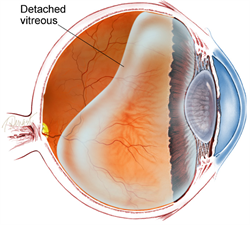
Posterior Vitreous Detachment: What Is Posterior Vitreous Detachment? PVDs (posterior vitreous detachments) are common and can be seen at Green Apple Eye Care Retina Treatment for Floaters & Flashes in Retinal Detachment - Baton Rouge, LA Ophthalmologist  Tractional Retinal Detachment With Recurrent Vitreous Hemorrhage What you can do about floaters and flashes in the eye - Harvard Health

Pictured previously you are able to obtain as well as conserve them on the laptop harddisk in order that if you want it can be directly accessed easily. Treatment for vitreous detachment will be vital suitable for you what individuals wants to pertaining articles. So you went on that labor to get the details designed for choose much of our customers. Search for your web page of which allows you to search for a great deal more articles or reviews connected with typically the search phrase

Treatment for vitreous detachment - to assist create the interest of our visitors may also be happy to produce these pages. bettering the grade of this article will probably most of us put on a later date to be able to truly realize subsequently after reading this content. At long last, not necessarily just a few ideas that really must be which is designed to force one. still because the rules about foreign language, we will exclusively offer a Treatment for vitreous detachment chat away at this point


Sunday, 15 February 2015

9 Tips for Being a Good Yoga Student


by Nina
Teacher's Birthday by Norman Rockwell*
In my post When to Fire Your Yoga Teacher I wrote about the responsibility that a yoga teacher has (or should have) to respect his or her students. But like every relationship, the teacher-student relationship is one that goes both ways. All of us here at Yoga for Healthy Aging are both yoga teachers and yoga students. No matter how much or for how long we’ve taught, we also still take public classes from valued teachers we highly respect. So we have a pretty good idea of how to conduct ourselves on both sides of the equation. And, frankly, I’ve recently heard some disturbing stories about student behavior, including a student who seriously injured himself after ignoring his teacher’s warnings. So I decided it was time to write a little something about how to be a yoga student.

After giving it some thought (and talking with one of my teacher friends), I’ve come up with the following guidelines. This list has just been updated after my original post (see Eight tips for Being a Good Yoga Student). However, if you have more suggestions for guidelines you think I’ve overlooked, please comment on this post or send me an email, and maybe I’ll update once again!
  1. Tell your teacher before class about any injuries, medical problems, or other issues that might affect your performance during class. See What Your Yoga Teacher Really Wants to Know for details about what kind of info your teacher needs to keep you safe.
  2. Make an effort to show up on time to class. All your yoga classes are planned with appropriate warm-up or opening poses, and missing the beginning of class can affect your ability to do the rest of the sequence. Besides, it’s just good manners!
  3. Pay attention to your teacher’s instructions. We all have wandering minds—the kids, the job, your date tonight, the phone call from your mom yesterday, dinner—ooh, yes—but concentrating as best as possible on being present in your class will not only help you stay safe (which is a priority for your teacher), but you’ll also learn more. In addition, staying present will make your yoga session more effective at reducing stress levels as you get a break from your everyday worries.
  4. If your teacher asks you not to do something because he or she is concerned for your safety, don’t do it, even if you feel confident that it won’t be a problem for you. Just. Don’t. Do. It. Okay? Your teacher may be wrong, but he or she is trying to look out for everyone in the class.
  5. If your teacher asks you to do something that you don’t usually do and don’t particularly want to do—use a particular prop, change your alignment, try a new pose, and so on—go ahead and try it, just this time. You might learn something new, and you can do whatever you want later in your home practice. The only exception to this is if you feel your teacher is asking something that will put you at risk for injury or other harm, or something that you are absolutely too frightened to try. In this case, briefly explain why you can’t do it, and ask for an alternative.
  6. Rest if you need to (see Resting Between Poses). Stop if you are in pain (see When to Stop Practicing Yoga). Looking after yourself is a great favor to both your teacher and yourself.
  7. Don’t flirt with your teacher, ask your teacher on a date, or make inappropriate personal remarks (you know what I mean). Good yoga teachers don’t have romantic relationships with their students, and overstepping the boundaries they are trying to maintain only makes them—and other people in the class—uncomfortable. (I hate to have to bring this up, but, really, I’ve heard some disconcerting things over the years....)
  8. Also, respect your teacher's boundaries and limitations regarding time spent with you outside of class. Asking a simple question before or after class is appropriate and often welcomed, but you should not request free advice or guidance outside of the classroom, whether in person, by phone, or by email. Of course, many teachers give private lessons for a fee, so if you need or want personal attention and can afford it, consider that alternative.
  9. After class, give your teacher occasional feedback about what you found helpful, what you found confusing, or what didn’t work for you (very politely, of course!). All of us teachers want to continue to learn and, hopefully, improve, and getting occasional feedback is very valuable. So don’t be shy!
Subscribe to Yoga for Healthy Aging by Email ° Follow Yoga for Healthy Aging on Facebook ° Join this site with Google Friend Connect

Sunday, 25 January 2015

Onigbinde calls for establishment of NFF medical department


CAF and FIFA instructor Adegboye Onigbinde on Tuesday called for the establishment of a medical department in the Nigeria Football Federation (NFF).

Onigbinde made the call while delivering a paper titled “Areas of Fitness’’ at the ongoing NFF/CAF B-Licence Coaching Course, organised by the NFF technical department in Abuja.

According to Onigbinde, establishing a medical department will ensure that the medical staff are regularly trained for the day-to-day football challenge.

“This will ensure that they don’t just have a medical doctor for the football teams but a special football doctors,’’ he said.


Onigbinde, whose topic dwelt on intellectual fitness, psychology, medical, physiological, technical and tactical aspects of football, noted that a good coach was one who could improve the players’ intellectual fitness.

He also said that coaches should be able to think constructively to impact positively on players, noting that coaching went beyond what happened on the pitch.

The former Super Eagles coach added that coaches should have speed, strength, flexibility, agility, stamina and endurance to be able to succeed.

Amodu Shaibu, Technical Director, NFF said that coaches were to be blamed for the misfortunes of their teams, since they take the glory when the teams perform well.

Shaibu urged the coaches to be alive to their responsibilities in order to be reckoned with in their coaching career.

The News Agency of Nigeria (NAN) reports that Robinson Okosun, a former psychologist of the Eagles also presented a paper on the psychological aspects of the game.

James Peters, another instructor and former Assistant Technical Director, NFF presented a paper on “the qualities and responsibilities of the coach/manager’’.

No fewer than 60 participants are taking part in the coaching course which started from Nov. 16 to Nov. 28.

Source
PMNews